Parts and Chairwork Psychotherapy
A gentle, trauma‑informed approach to understanding inner conflict, self‑criticism, and emotional overwhelm.
A Brief Introduction to Parts and Chairwork
Parts & Chairwork Therapy
Some difficulties are less about a single problem to solve and more about different parts of us pulling in different directions.
Parts Work Therapy, including Chairwork, is an experiential, trauma‑informed approach that helps people understand, relate to, and integrate different aspects of themselves, particularly those shaped by difficult or overwhelming experiences.
At ANIMA, Parts Work and Chairwork are used to support meaningful, lasting change by working directly with inner conflicts, emotional patterns, and protective responses.
What is Parts Work Therapy?
Parts Work is based on the understanding that the mind is made up of different “parts” or modes, each with its own perspective, emotions, and role.
These parts often develop to help us cope or protect ourselves, especially in the context of stress, trauma, or unmet needs. Over time, some parts can become rigid, conflicted, or overwhelming.
Parts Work Therapy helps people:
Understand and differentiate their inner parts
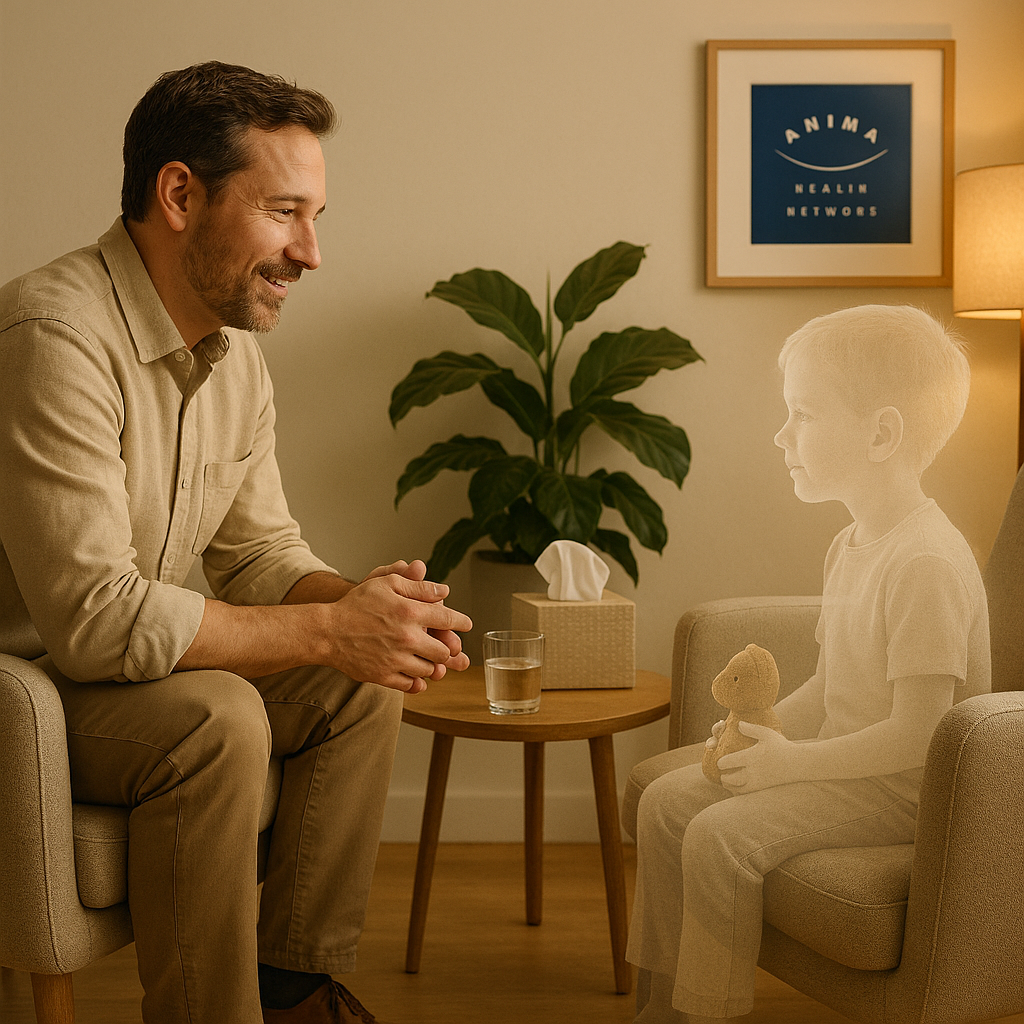
Develop a more compassionate relationship with themselves
Reduce internal conflict and emotional reactivity
Strengthen clarity, agency, and self‑leadership
What is Chairwork?
Chairwork is the primary experiential method used within Parts Work Therapy.
By using physical space (such as chairs) to represent different parts, internal experiences are externalised and brought into dialogue. This makes inner processes clearer, more accessible, and emotionally engaged.
Rather than only talking about difficulties, Chairwork allows people to:
Give voice to inner critics, vulnerable parts, and protective responses
Explore conflicting needs or decisions
Access emotions that feel stuck or difficult to reach
Develop new ways of relating to themselves
The work is carefully paced and guided, with safety and containment central throughout.
Why Parts Can Feel “Stuck”
When experiences are overwhelming, particularly early in life or in the context of trauma, different parts of the self may take on extreme roles to cope.
These parts can remain active long after the original threat has passed, leading to:
Intense self‑criticism or shame
Emotional overwhelm or shutdown
Ongoing inner conflict
Repetitive relational patterns
Feeling “stuck” despite insight or effort
These responses reflect adaptation, not failure.
How Parts Work and Chairwork Help
Through structured, experiential therapy, Parts Work supports the nervous system to move out of threat‑based patterns and toward greater integration.
People often experience:
Reduced inner conflict and self‑criticism
Improved emotional regulation
Greater self‑compassion and clarity
A more cohesive sense of self
Increased capacity for choice rather than reactivity
Chairwork supports change at an emotional and bodily level, where deeper and more enduring shifts tend to occur.
What Parts Work Can Help With
Parts Work Therapy and Chairwork may be helpful for people experiencing:
Trauma and complex trauma
Anxiety is linked to inner conflict or past experiences
Persistent self‑criticism or shame
Difficulties with emotional regulation
Relationship patterns that feel hard to shift
Feeling stuck despite previous therapy
Suitability and timing are always assessed collaboratively.
Parts Work and Chairwork at ANIMA
At ANIMA, Parts Work Therapy is provided by Clinical Psychologists with training in experiential and trauma‑informed approaches.
Chairwork is integrated into a broader therapeutic framework that may include EMDR and Schema Therapy. The work is collaborative, carefully paced, and responsive to individual needs.
We recognise that effective parts‑based therapy requires safety, attunement, and clinical depth, not pressure or performance.
What to Expect
Parts Work Therapy at ANIMA typically involves:
Assessment and shared formulation
Preparation and stabilisation
Experiential work using Chairwork and related methods
Integration and consolidation
The process is tailored and proceeds at a pace that feels safe and manageable
Taking the Next Step
If you’re considering whether Parts Work Therapy or Chairwork may be helpful for you, we invite you to get in touch.
Other Services
Our team provides an array of psychological therapies and assessment services to the community. We also provide professional training; and resources for both patients and health professionals.
Assessments
Therapy
Training
What Other Therapies Do We Provide?
-
Schema Therapy is an impactful therapeutic intervention designed to empower individuals in overcoming entrenched, counterproductive emotional and behavioural patterns that may interfere with interpersonal relationships, career prospects and life satisfaction. Schema therapy aims to help uncover "Early Maladaptive Schemas" (EMS), which are subconscious and enduring emotional and cognitive patterns that develop in response to challenging childhood experiences.
At ANIMA Health Network, all of our clinical psychologists are trained in Schema Therapy. Our aim is to help you address the root causes of emotional and psychological distress and empower you to create lasting meaningful change.
Find out more about Schema Therapy. -
EMDR is a psychotherapeutic approach developed to help individuals process and alleviate the emotional distress associated with traumatic memories. The aim is to facilitate the reprocessing of these memories, reducing their emotional impact and fostering adaptive resolution. EMDR is particularly effective in treating trauma-related conditions, including PTSD, by targeting specific memories contributing to emotional distress.
At ANIMA, all of our Clinical Psychologists/Registrars are fully EMDR trained.
Find out more about EMDR. -
Parts and Chairwork is an experiential, evidence‑based approach that helps people understand and work with different “parts” of themselves—such as inner critics, protectors, or vulnerable feelings. Using guided dialogue and chair‑based exercises, this therapy supports emotional clarity, self‑compassion, and integration, particularly for long‑standing patterns, trauma, and complex emotional difficulties.
-
Imagery Rescripting is a powerful therapeutic approach designed to address and alleviate emotional distress caused by upsetting mental images or memories. When individuals have distressing memories, the traditional response might be to replay them as they originally occurred, reinforcing negative emotions. In imagery rescripting, however, the person collaborates with a therapist to transform these troubling mental images. It's akin to jointly editing the script of a mental movie to introduce a more positive and constructive narrative.
During therapy, individuals actively engage in modifying the imagery associated with a distressing memory. By reshaping the mental representation of the event, the aim is to create a new, less distressing ending or perspective. This process enables individuals to reinterpret the meaning of the memory, fostering a sense of empowerment and control over their emotional responses.
-
Psychodynamic psychotherapy is a form of therapy that explores the unconscious mind to understand the underlying causes of psychological distress. It focuses on how past experiences and unresolved conflicts influence present behaviour and emotions. By examining these patterns, therapists can help patients gain insight into their thoughts, feelings, and behaviours, leading to greater self-awareness and personal growth. Psychodynamic therapy is often used to address a wide range of issues, including anxiety, depression, relationship difficulties, and trauma.
-
Dialectical Behavior Therapy (DBT) is a type of cognitive-behavioral therapy (CBT) that was originally developed by Dr. Marsha Linehan to treat individuals with borderline personality disorder (BPD). However, it has since been adapted and expanded to treat other mental health conditions as well.
DBT is based on the dialectical philosophy, which emphasizes finding a balance between acceptance and change. It integrates strategies from cognitive-behavioral techniques, mindfulness practices, and dialectical strategies to help individuals develop skills for managing intense emotions, improving relationships, and creating a life worth living.
-
ACT is a form of therapy that emphasises acceptance of difficult thoughts and feelings, and commitment to living a meaningful life. It helps patients learn to observe their thoughts and feelings without judgment, and to engage in values-driven actions. ACT focuses on mindfulness, present-moment awareness, and the cultivation of psychological flexibility. By developing these skills, patients can reduce the impact of negative emotions and increase their ability to live a fulfilling life. ACT is often used to treat a variety of mental health conditions, including anxiety, depression, and substance abuse.
-
CBT helps patients identify and challenge negative thought patterns and develop healthier coping strategies. By changing the way patients think, they can improve their emotional state and behaviour. CBT is often used to treat a wide range of mental health conditions, including depression, anxiety, and phobias.
Ready to Book with Anima Health Network?
Please complete a new enquiry form, and our Patient Care Team will be in touch to see how we can best support you.
If you are unsure, please feel free to call us: